What Are Clan Symbols?
Scottish clans carry a set of symbols that express identity, history, and allegiance. For Clan MacNeil, those symbols include the coat of arms, the crest badge, and the clan motto. Each branch of the clan — Barra, Colonsay, and Gigha — carries its own distinct versions.
The Coat of Arms
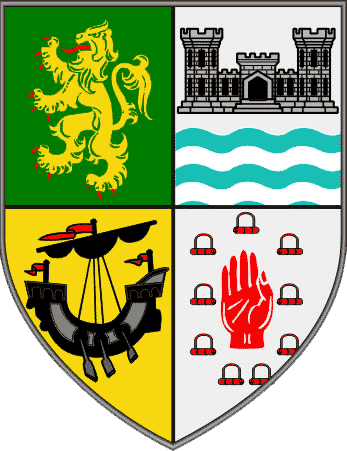
The coat of arms belongs solely to the chief of the clan. Both the Macneil of Barra and the Macneil of Colonsay-Gigha share two elements: the Lion Rampant and the Masted Ship. The Lion Rampant honors the Royal Flag of the King of Scotland, while the Masted Ship reflects the seafaring tradition the MacNeils are famous for.
The Macneil of Barra coat of arms includes a castle in water, representing Kisimul Castle in Castlebay. The lower right quadrant shows the Red Hand of Ulster surrounded by nine shackles, representing Niall of the Nine Hostages. The red velvet chapeau lined with ermine signals the rank of Baron, and the helmet below represents rank.
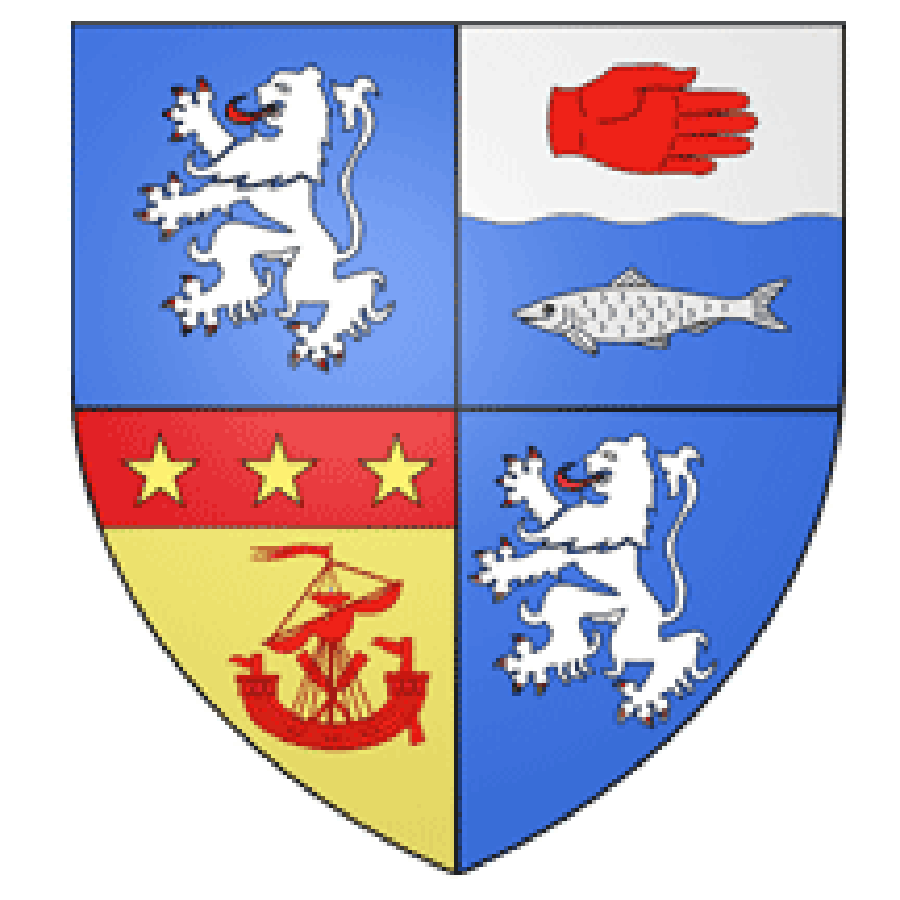
The Macneil of Colonsay-Gigha coat of arms replaces the shackles with a salmon, representing wisdom, knowledge, strength, and the ability to return home from the outermost ocean.
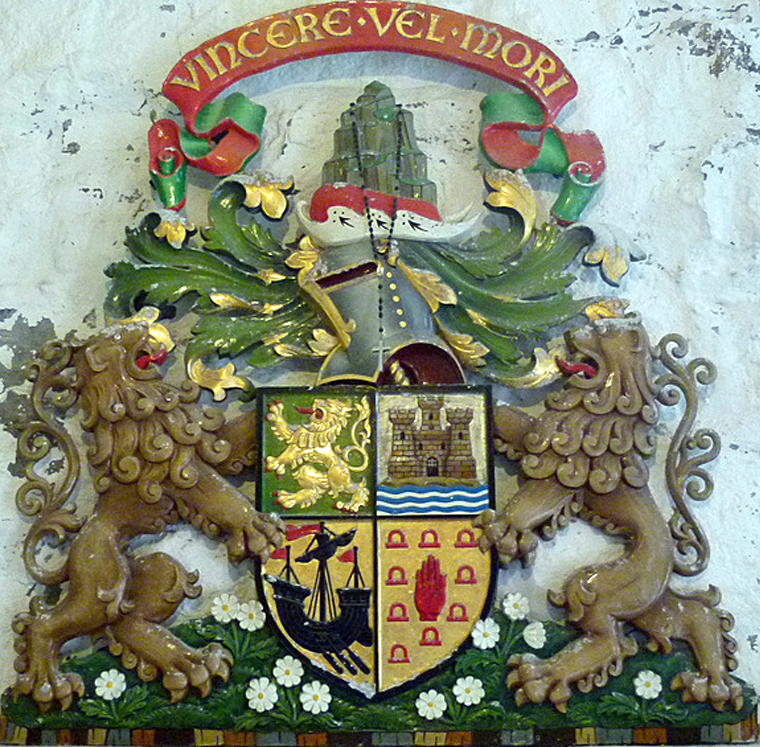
A depiction of the Barra coat of arms is painted in the Great Hall of Kisimul Castle. It sits on a base of the clan plant badge, the Dryas, held up by lions rampant.
The Crest Badge
While the coat of arms belongs to the chief alone, the crest badge belongs to every member of the clan. Members wear it to show allegiance to their chief, on clothing, a sash or cap, or as jewelry. Crest badges have been part of Scottish heraldry since the 15th century.
Crest Badges

The Clan MacNeil crest badge contains: on a chapeau lined with ermine, a rock proper. The motto is buaidh no bas, which translates from Scottish Gaelic as “victory or death.”

The Macneils of Colonsay carry a distinct crest badge: an armoured dexter arm with dagger, and the motto vincere aut mori, Latin for “conquer or die.”
Symbols That Endure
Clan symbols are more than decoration. They carry the history of the MacNeils across centuries — the battles fought, the islands claimed, the chiefs who led. Whether you wear a crest badge at a Highland Games or recognize the Lion Rampant on a coat of arms, you are part of that same story.