
Uisge Beatha
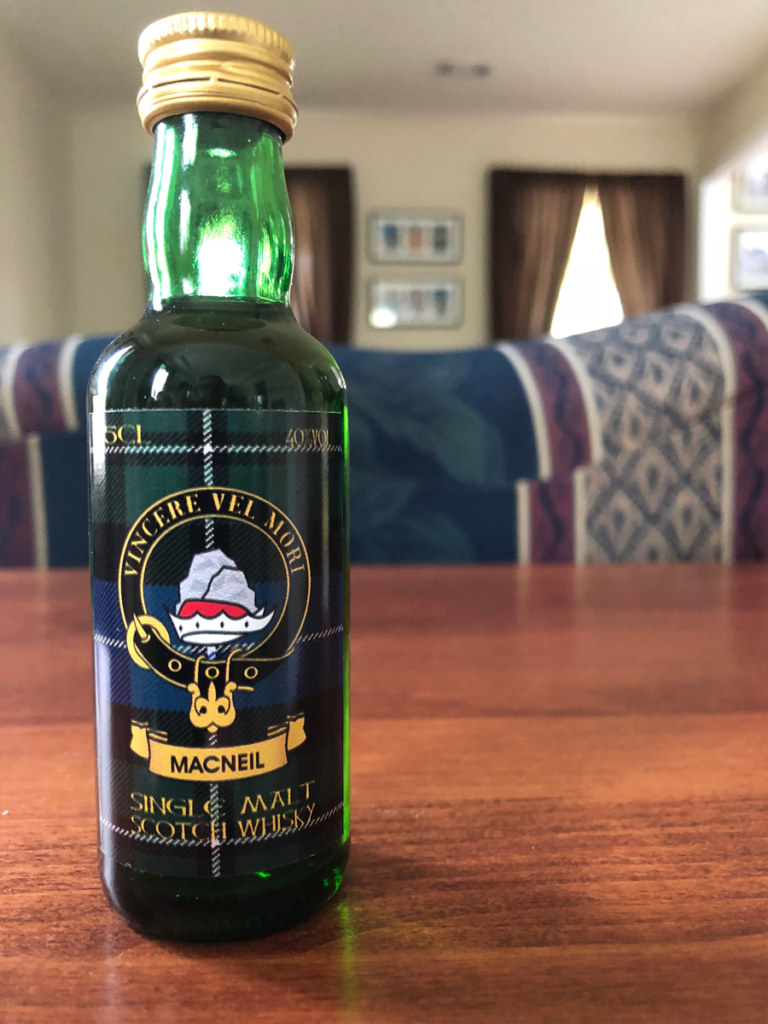
The Scots called it uisge beatha, from the Latin aqua vitae: water of life. The anglicized version of those Gaelic words eventually became “whisky,” and Scotland has been making it, arguing about it, and sharing it ever since. For Clan MacNeil, whisky is not just a drink. It is a social ritual, a point of homeland pride, and a regular presence at the clan tent during Highland Games season.
A Brief History
The first written record of Scotch whisky production dates to 1494, when an entry in the Scottish Exchequer Rolls recorded a supply of malt to Friar John Cor for the making of aqua vitae. The tradition almost certainly predates that record by generations. By the 18th century, distilling was widespread across the Highlands and Islands, legal and otherwise, and whisky had become deeply embedded in Highland culture.
The Excise Act of 1823 brought illegal distilling largely under control by making legal production financially viable, and the modern Scotch whisky industry grew from that point. Today Scotland has over 140 active distilleries producing whisky across five regions: Highlands, Lowlands, Speyside, Islay, and Campbeltown. Each region produces whisky with recognizable regional characteristics, though individual distillery character matters far more than regional rules of thumb.
The MacNeil Homeland Distilleries
For CMAA members, two distilleries carry a particular significance: both operate on the Isle of Barra, the ancestral homeland of Clan MacNeil.
The Isle of Barra Distillers produces gin and whisky using water from the island’s own sources, with a spirit that reflects the coastal, wind-swept character of the Outer Hebrides. Supporting these distilleries is not just purchasing a good drink. It is a direct investment in the economic life of the homeland.
How to Approach a Dram
Scotch whisky is broadly divided into single malts, made from malted barley at a single distillery, and blended whiskies, which combine malt and grain whiskies from multiple sources. Single malts tend to carry more distinctive regional and distillery character. Blends are often more approachable for newcomers.
Adding a small amount of still water to a single malt is not a sign of weakness. It opens up the aroma and can reveal flavors that are hidden at full strength. Ice, on the other hand, closes the spirit down. Room temperature or a few drops of water is the traditional approach.
If you find yourself at a CMAA clan tent during Highland Games season, there is a reasonable chance someone will offer you a sample. Say yes. That is what the clan tent is for.
Slàinte Mhath
The traditional Gaelic toast translates as “good health.” It is pronounced roughly “slahn-ja vah.” Use it at Burns Night, at the clan tent, or whenever a dram appears in your hand among friends. It is one of those small Gaelic phrases that carries the whole weight of Scottish hospitality in four syllables.