More Than a Musical Instrument
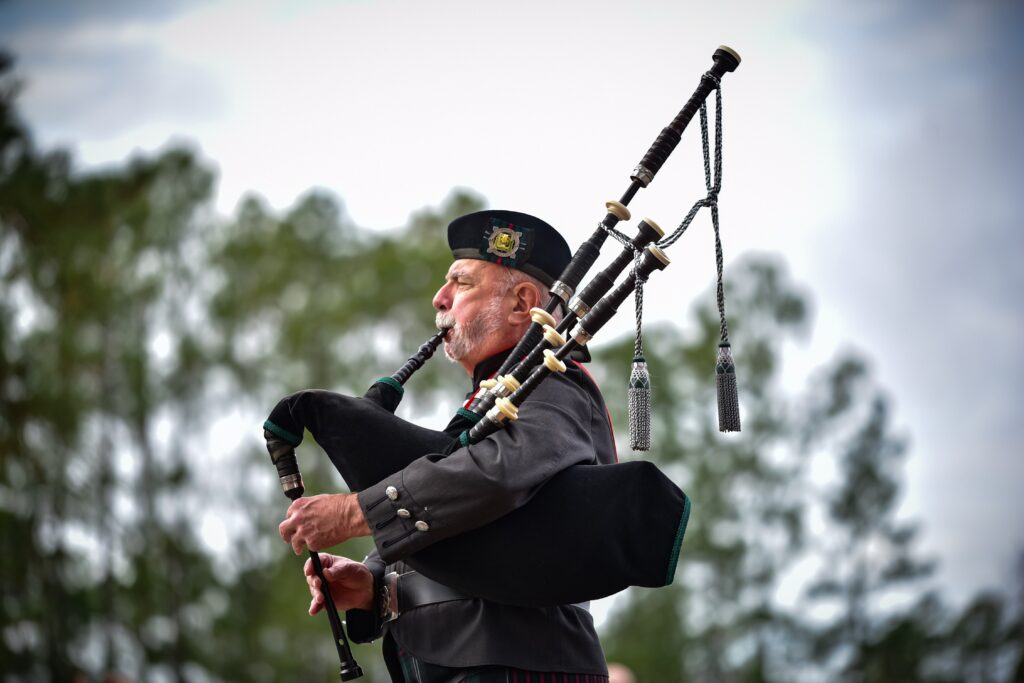
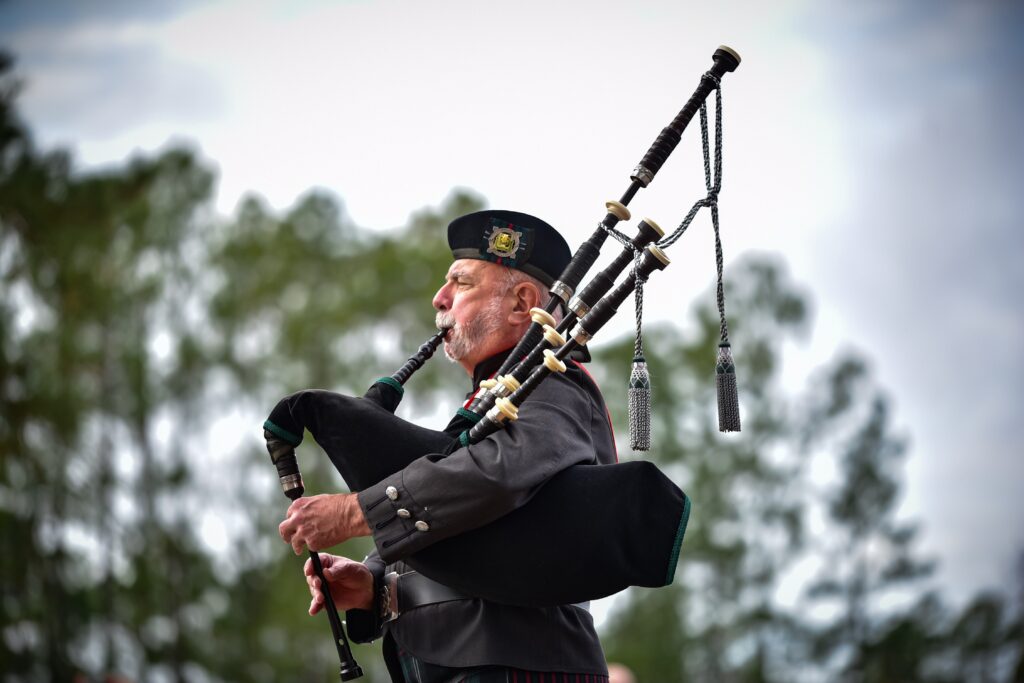
When people hear bagpipes, they know exactly where they are in the world. No other instrument carries Scotland so completely in its sound. The pipes have been part of Scottish life for centuries, from the battlefield to the wedding, from the Highland Games tent to the lone hillside. For Clan MacNeil, the sound of pipes at a gathering is not background music. It is home.
A Brief History of the Bagpipes in Scotland
The first recorded mention of bagpipes in Scotland dates to 1549, at the Battle of Pinkie, when the pipes replaced trumpets to inspire Highland soldiers into battle. From that point forward, the piper occupied a position of genuine honor in Highland clan life. A clan piper was not a hired performer. He was a hereditary position, trained from childhood, and considered essential to the clan’s identity and morale.
In the Scottish Lowlands, pipers traveled as minstrels, playing at weddings, feasts, and fairs along the Border country. Highland pipers drew more heavily on their Celtic roots and held a higher social standing than their Lowland counterparts. The two traditions developed distinctly, though both shaped the instrument and its repertoire.
The Bagpipes Go Global
Scottish emigration carried the pipes around the world. Wherever Scots settled, the pipes followed. In North America, the tradition took hold particularly strongly in Cape Breton, Nova Scotia, and the Cape Fear region of North Carolina, where Highlanders rebuilt their communities and kept the music alive through generations.
Since the 1960s, the bagpipes have also crossed into unexpected musical territory. Rock, metal, jazz, hip-hop, punk, and classical composers have all incorporated the pipes. Paul McCartney’s “Mull of Kintyre” introduced the instrument to a new generation of listeners worldwide.
The Pipes at Highland Games
Highland Games competitions are where the serious business of piping happens in North America today. Solo piping, pipe band competitions, and drumming competitions run alongside the athletic events at most major games. CMAA members and commissioners can be found at dozens of games across the country each year, and the sound of a pipe band opening ceremonies never gets old.
CMAA’s own piper, Timothy Hinson, represents the clan at events throughout the Southeast. If you have heard pipes at a MacNeil clan tent, there is a good chance Timothy was at the chanter.
Want to Learn or Connect?
Whether you want to learn the pipes yourself, find a pipe band near you, or simply understand what you are hearing at the next Highland Games, these resources are a good place to start.