A Language That Crossed the Ocean
When the Highland Scots left for North America in the 18th and 19th centuries, they brought their language with them. Scottish Gaelic, the ancient tongue of the clans, took root in the communities they built: the Cape Fear valley of North Carolina, the hills of Cape Breton Island in Nova Scotia, and scattered settlements across the Maritime provinces of Canada. For generations, Gaelic was the language of the kitchen, the church, and the ceilidh in these communities, long after it had begun to fade in Scotland itself.
The Language of Clan MacNeil
For Clan MacNeil, Gaelic is not an abstraction. The Isle of Barra was one of the last strongholds of Scottish Gaelic in Scotland, and the language remained the first language of the island well into the 20th century. When Barra MacNeils emigrated to Cape Breton in the early 1800s, they carried Gaelic with them and spoke it in their new communities for generations. Cape Breton Gaelic, as it developed, retained features of the language that had already changed or disappeared in Scotland.
Even today, Gaelic phrases appear throughout CMAA life. Slàinte mhath at the whisky toast. Buaidh no bas as the clan motto. Cianalas for that deep sense of longing for home. These are not decorations. They are the living remnants of a language that shaped who the MacNeils are.
Where Gaelic Survives Today
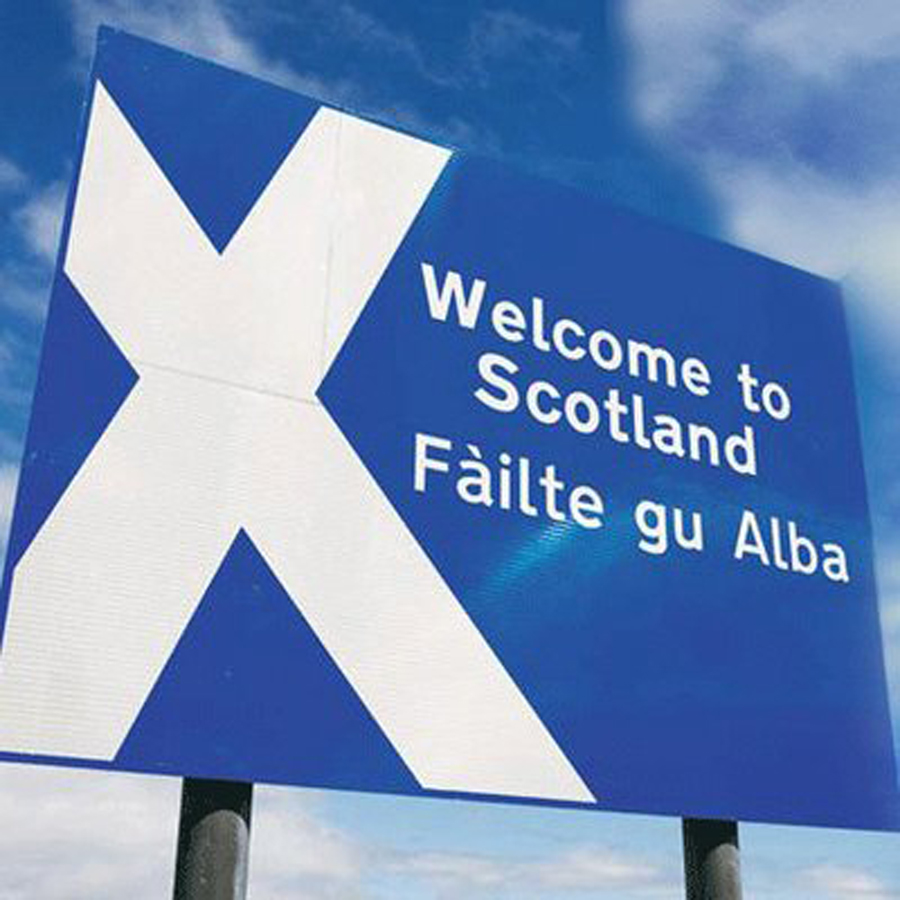
Scottish Gaelic is spoken by approximately 60,000 people in Scotland today, concentrated in the Western Isles, including the Outer Hebrides where Barra sits. The Scottish Government has invested significantly in Gaelic-medium education, broadcasting through the BBC Alba television channel, and revitalization programs across the Highlands and Islands.
In North America, Cape Breton Island in Nova Scotia remains the most significant stronghold of the language outside Scotland. The Gaelic College in St Ann’s, Cape Breton, has offered Gaelic language and culture programs since 1938 and draws students from across the diaspora. A smaller but dedicated community of learners exists across the United States as well.
Why It Matters
Language carries things that translation cannot: a way of seeing the world, a set of relationships between concepts, a history embedded in the words themselves. The Gaelic word cianalas has no real English equivalent. Neither does the concept of ceilidh as a gathering of community rather than simply a dance. When a language disappears, those ways of seeing go with it.
For clan members tracing their MacNeil roots, encountering Gaelic in old records, place names, and family stories is inevitable. Understanding even a little of the language opens a door into the world your ancestors actually lived in.
Resources for Learning
- Duolingo Scottish Gaelic Course — free, accessible starting point
- LearnGaelic.scot — the Scottish Government’s official learning platform
- The American Scottish Gaelic Society
- Scottish Gaelic Foundation of the USA