The Harp Most People Don’t Know Scotland Has
Ask most people to name a Scottish instrument and you will hear bagpipes, maybe fiddle. Few people mention the harp. That is a gap worth closing. The clarsach, as it is known in Scottish Gaelic, is one of the oldest instruments in Scottish and Irish tradition, and it has been part of Gaelic musical life for well over a thousand years.
What Is the Clarsach?
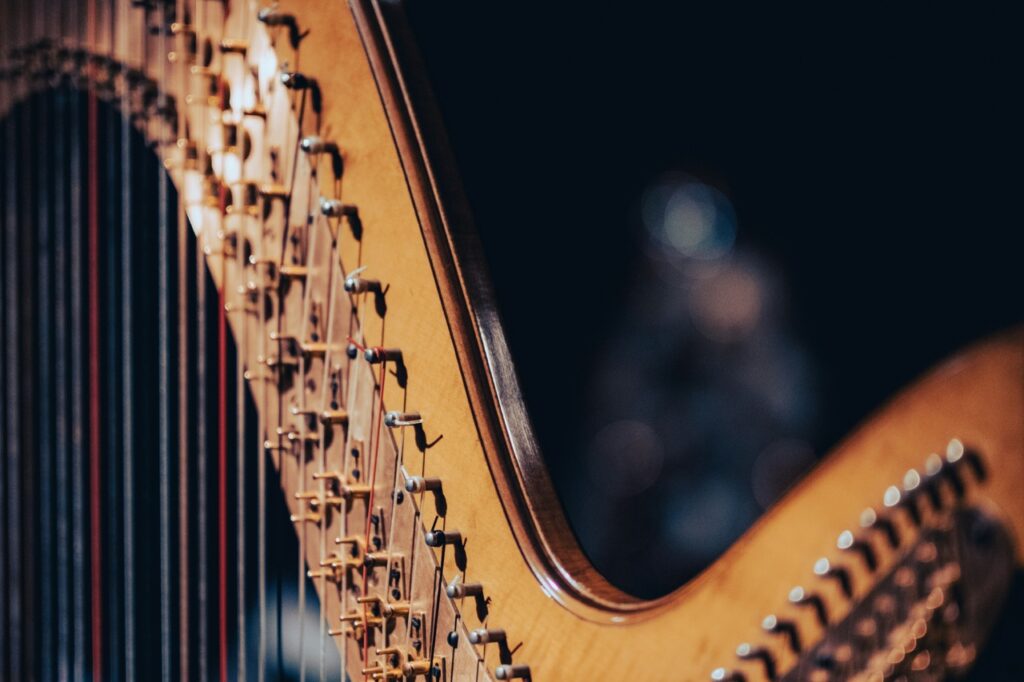
The clarsach is a small, wire-strung harp traditional to Scotland and Ireland. It differs from the large orchestral harp in both size and sound. Wire stringing gives it a bright, resonant tone with a long sustain that carries qualities unlike any other instrument. In medieval Gaelic culture, the harper held a position of high social standing, ranking alongside the poet and the bard as a keeper of tradition and memory.
The instrument appears in Scottish historical records going back to at least the 10th century. The famous Queen Mary Harp, now held in the National Museum of Scotland in Edinburgh, dates to around the 15th century and is one of the oldest surviving Scottish harps in existence.
The Clarsach and the Bagpipes
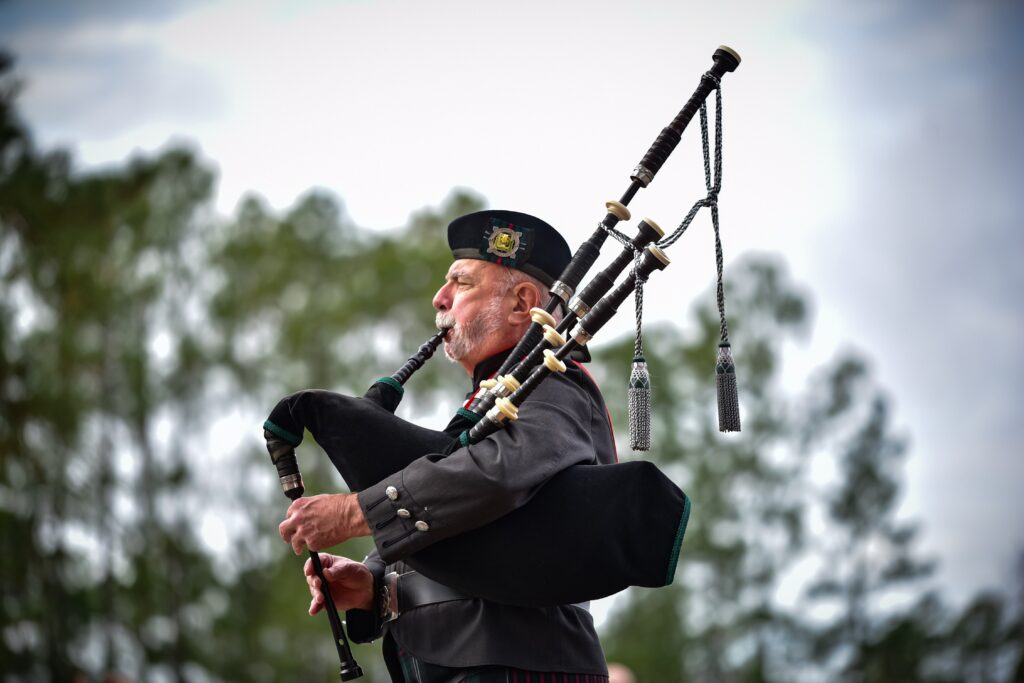
There is evidence that the musical tradition of the clarsach directly influenced the development of bagpipe repertoire. As the harp declined in the 17th and 18th centuries, partly due to political suppression of Gaelic culture following the Jacobite risings, the pipes absorbed some of its role in clan musical life. The two instruments share a repertoire of slow airs and laments that passed between them across the generations.
The Revival
The clarsach nearly disappeared entirely during the 18th and 19th centuries. Its revival began in the early 20th century, driven largely by the work of the Clarsach Society, founded in Scotland in 1931. Today the instrument is taught in schools across Scotland, featured at the Royal National Mod, and played by a growing community of performers on both sides of the Atlantic.
Contemporary players like Catriona McKay and Alison Kinnaird have expanded the clarsach’s range far beyond its traditional repertoire, bringing it into jazz, contemporary folk, and experimental music. The instrument is quietly experiencing a renaissance.
The Clarsach and Clan MacNeil
For a clan with roots in the Hebrides, the clarsach is not an abstract historical curiosity. The harping tradition was strong in the Western Isles, and the courts of clan chiefs were among the last places where the hereditary harper survived into the modern era. CMAA members who play the clarsach carry something genuinely ancient with them.